| Title | Amphibian and Reptile Conservation |
| Abbreviation | Amphib. Reptile Conserv. |
| Publication Type | Journal |
| Subject Area, Categories, Scope | Animal Science and Zoology (Q2); Ecology (Q2); Nature and Landscape Conservation (Q2); Ecology, Evolution, Behavior and Systematics (Q3) |
| h-index | 16 |
| Overall Rank/Ranking | 14337 |
| SCImago Journal Rank (SJR) | 0.378 |
| Impact Score | 1.16 |
| Publisher | Amphibian and Reptile Conservation |
| Country | United States |
| ISSN | 1083446X, 15259153 |
| Best Quartile | Q2 |
| Coverage History | 2016-2024 |
Amphibian and Reptile Conservation is a journal covering the technologies/fields/categories related to Animal Science and Zoology (Q2); Ecology (Q2); Nature and Landscape Conservation (Q2); Ecology, Evolution, Behavior and Systematics (Q3). It is published by Amphibian and Reptile Conservation. The overall rank of Amphibian and Reptile Conservation is 14337. According to SCImago Journal Rank (SJR), this journal is ranked 0.378. SCImago Journal Rank is an indicator, which measures the scientific influence of journals. It considers the number of citations received by a journal and the importance of the journals from where these citations come. SJR acts as an alternative to the Journal Impact Factor (or an average number of citations received in last 2 years). This journal has an h-index of 16. The best quartile for this journal is Q2.
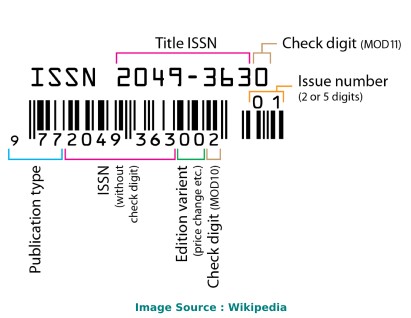
The ISSN of Amphibian and Reptile Conservation journal is 1083446X, 15259153. An International Standard Serial Number (ISSN) is a unique code of 8 digits. It is used for the recognition of journals, newspapers, periodicals, and magazines in all kind of forms, be it print-media or electronic. Amphibian and Reptile Conservation is cited by a total of 41 articles during the last 3 years (Preceding 2024).
The Impact IF 2024 of Amphibian and Reptile Conservation is 1.16, which is computed in 2025 as per its definition. Amphibian and Reptile Conservation IF is increased by a factor of 0.25 and approximate percentage change is 27.47% when compared to preceding year 2023, which shows a rising trend. The impact IF, also denoted as Journal impact score (JIS), of an academic journal is a measure of the yearly average number of citations to recent articles published in that journal. It is based on Scopus data.
Impact IF 2024 of Amphibian and Reptile Conservation is 1.16. If the same upward trend persists, Impact IF may rise in 2025 as well.
| Year | Impact IF |
|---|---|
| 2025/2026 | Coming Soon |
| 2024 | 1.16 |
| 2023 | 0.91 |
| 2022 | 1.02 |
| 2021 | 1.36 |
| 2020 | 1.19 |
| 2019 | 1.56 |
| 2018 | 1.18 |
| 2017 | 0.74 |
| 2016 | 0.00 |
Amphibian and Reptile Conservation has an h-index of 16. It means 16 articles of this journal have more than 16 number of citations. The h-index is a way of measuring the productivity and citation impact of the publications. The h-index is defined as the maximum value of h such that the given journal/author has published h papers that have each been cited at least h number of times.
The ISSN of Amphibian and Reptile Conservation is 1083446X, 15259153. ISSN stands for International Standard Serial Number.
An ISSN is a unique code of 8 digits. It is used for the recognition of journals, newspapers, periodicals, and magazines in all kind of forms, be it print-media or electronic.
The overall rank of Amphibian and Reptile Conservation is 14337. According to SCImago Journal Rank (SJR), this journal is ranked 0.378. SCImago Journal Rank is an indicator, which measures the scientific influence of journals. It considers the number of citations received by a journal and the importance of the journals from where these citations come.
| Year | SJR |
|---|---|
| 2025/2026 | Coming Soon |
| 2024 | 0.378 |
| 2023 | 0.392 |
| 2022 | 0.580 |
| 2021 | 0.565 |
| 2020 | 0.515 |
| 2019 | 0.507 |
| 2018 | 0.448 |
| 2017 | 0.425 |
| 2016 |
| Year | Ranking |
|---|---|
| 2025/2026 | Coming Soon |
| 2024 | 14337 |
| 2023 | 13173 |
| 2022 | 8896 |
| 2021 | 8825 |
| 2020 | 9812 |
| 2019 | 9656 |
| 2018 | 10411 |
| 2017 | 10466 |
| 2016 | 32228 |
Amphibian and Reptile Conservation is published by Amphibian and Reptile Conservation. It's publishing house is located in United States. Coverage history of this journal is as following: 2016-2024. The organization or individual who handles the printing and distribution of printed or digital publications is known as Publisher.
Visit the official website of the journal/conference to check the further details about the call for papers.
The IS0 4 standard abbreviation of Amphibian and Reptile Conservation is Amphib. Reptile Conserv.. This abbreviation ('Amphib. Reptile Conserv.') is well recommended and approved for the purpose of indexing, abstraction, referencing and citing goals. It meets all the essential criteria of ISO 4 standard.
ISO 4 (International Organization for Standardization 4) is an international standard that defines a uniform and consistent system for abbreviating serial publication titles and journals.
If your research field is/are related to Animal Science and Zoology (Q2); Ecology (Q2); Nature and Landscape Conservation (Q2); Ecology, Evolution, Behavior and Systematics (Q3), then please visit the official website of this journal.
The acceptance rate/percentage of any academic journal/conference depends upon many parameters. Some of the critical parameters are listed below.
It is essential to understand that the acceptance rate/rejection rate of papers varies among journals. Some Journals considers all the manuscripts submissions as a basis of acceptance rate computation. On the other hand, few consider the only manuscripts sent for peer review or few even not bother about the accurate maintenance of total submissions. Hence, it can provide a rough estimation only.
The best way to find out the acceptance rate is to reach out to the associated editor or to check the official website of the Journal/Conference.
Amphibian and Reptile Conservation latest impact IF is 1.16. It's evaluated in the year 2024. The highest and the lowest impact IF or impact score of this journal are 1.56 (2019) and 0.00 (2016), respectively, in the last 9 years. Moreover, its average IS is 1.01 in the previous 9 years.
The Amphibian and Reptile Conservation has an SJR (SCImago Journal Rank) of 0.378, according to the latest data. It is computed in the year 2025. In the past 9 years, this journal has recorded a range of SJR, with the highest being 0.580 in 2022 and the lowest being in 2016. Furthermore, the average SJR of the Amphibian and Reptile Conservation over the previous 9-year period stands at 1.01.
The latest h-index of the Amphibian and Reptile Conservation is 16.
The Amphibian and Reptile Conservation is published by the Amphibian and Reptile Conservation, with its country of publication being the United States.
The Amphibian and Reptile Conservation is currently ranked 14337 out of 27955 Journals, Conferences, and Book Series in the latest ranking. Over the course of the last 9 years, this journal has experienced varying rankings, reaching its highest position of 8825 in 2021 and its lowest position of 32228 in 2016.
The standard ISO4 abbreviation for the Amphibian and Reptile Conservation is Amphib. Reptile Conserv..
Amphibian and Reptile Conservation is classified as a journal that the Amphibian and Reptile Conservation publishes.
The Amphibian and Reptile Conservation encompasses the following areas:
For a more comprehensive understanding of its scope, check the official website of this journal.
The Amphibian and Reptile Conservation is assigned the following International Standard Serial Numbers (ISSN): 1083446X, 15259153.
The best quartile for the Amphibian and Reptile Conservation is Q2 (2024).
The Amphibian and Reptile Conservation coverage history can be summarized as follows: 2016-2024.
| Journal/Conference/Workshop/Book Title | Type | Ranking | Publisher | h-index | Impact Score |
|---|---|---|---|---|---|
| Journal of Field Archaeology | journal | 7683 | Maney Publishing | 48 | 1.85 |
| Applied Ecology and Environmental Research | journal | 19122 | Corvinus University of Budapest | 48 | 0.84 |
| Proceedings of the International Symposium on Power Semiconductor Devices and ICs | conference and proceedings | 9089 | Institute of Electrical and Electronics Engineers Inc. | 55 | 2.19 |
| Qualitative Research | journal | 1300 | SAGE Publications Ltd | 101 | 6.77 |
| Clinical Medicine and Research | journal | 14921 | Marshfield Clinic | 64 | 1.25 |
| Journal of Applied Business Research | journal | 26260 | Clute Institute | 33 | 0.17 |
| Howard Journal of Communications | journal | 14582 | Taylor and Francis Ltd. | 42 | 1.27 |
| Rinsan Shikenj Oha/Journal of the Hokkaido Forest Products Research Institute | journal | 29148 | Hoikkaido Forest Products Research Institute | 4 | 0.00 |
| Indian Phytopathology | journal | 16772 | Springer | 20 | 0.91 |
| PLoS ONE | journal | 6756 | Public Library of Science | 467 | 2.82 |
| Year | Impact Score (IS) |
|---|---|
| 2025/2026 | Coming Soon |
| 2024 | 1.16 |
| 2023 | 0.91 |
| 2022 | 1.02 |
| 2021 | 1.36 |
| 2020 | 1.19 |
| 2019 | 1.56 |
| 2018 | 1.18 |
| 2017 | 0.74 |
| 2016 | 0.00 |